 Trasgu Sync
Coming to macOS
Trasgu Sync
Coming to macOS
Trasgu Sync
Coming to macOS
Trasgu Sync
Coming to macOS
Trasgu Sync copies folders between your Mac, external drives, network shares, a NAS and OneDrive. Draw the chain once and it runs every night, wakes the machines it needs and shows you where every copy lives.
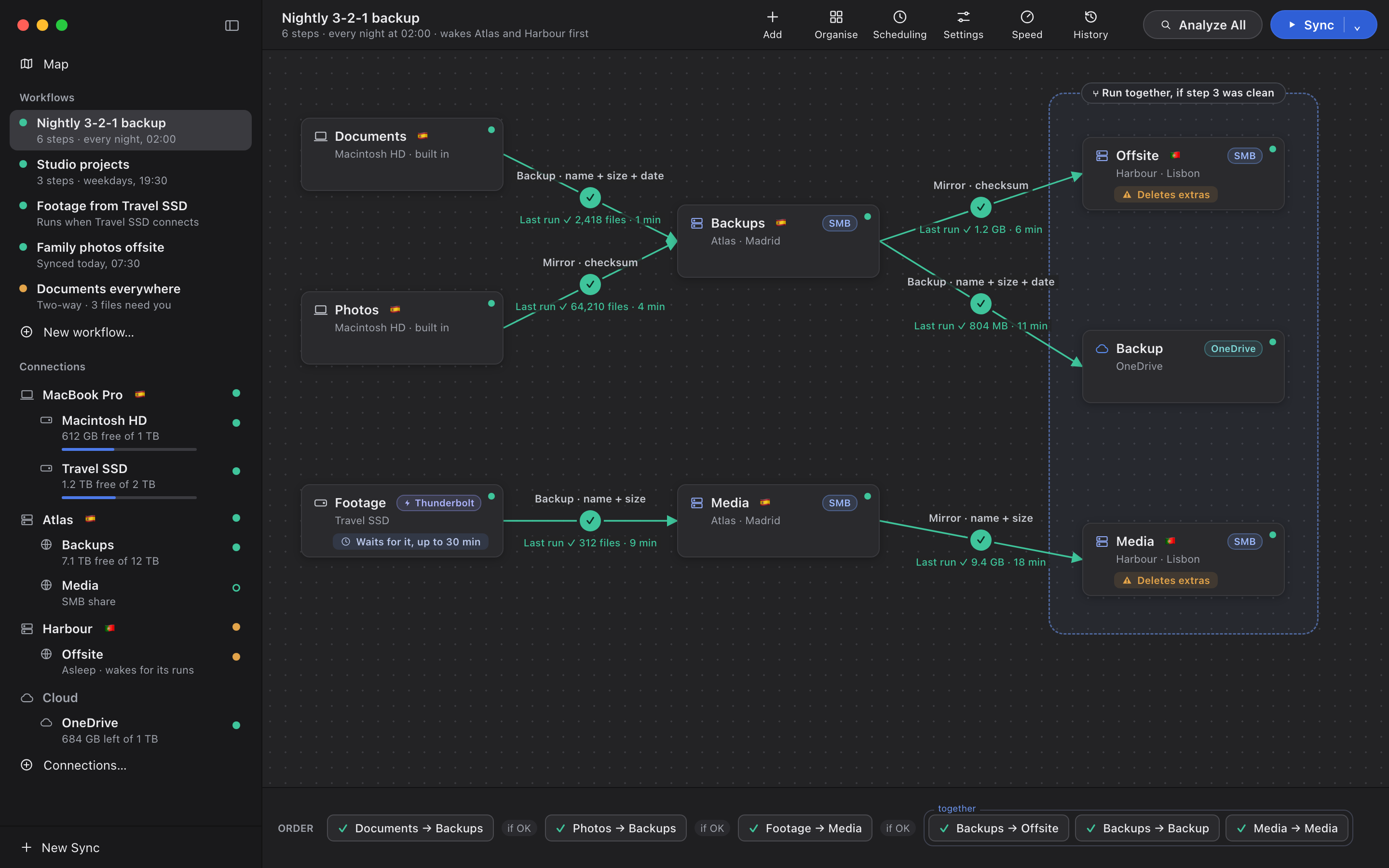
Most people's backups are a mix of a cloud client, a NAS task, a drive they plug in on Sundays and a hope. Trasgu Sync puts them in one place, with one way to build them.
Put folders on a canvas and drag an arrow between them. Each arrow is a step: backup, mirror or two-way. Chain them, run some together, and gate the rest on the ones before.
Analyze first and read one table of what will change, aligned by path. Conflicts explain themselves, identical folders roll up, and you can change any row's mind with a click.
Every removal goes to a trash: the Mac's Trash, the share's recycle bin, or the app's own, kept for as long as you choose. There is no permanent delete.
A share that mounts empty, a drive swapped for another with the same name, a mirror about to remove a third of a folder: the run stops and says why before anything moves.
A NAS that sleeps at night is fine. A workflow can wake the machines its folders live on before it starts, wait until their shares are ready, and note which ones it woke.
Say where each machine sits and the map draws your routes between places, then lists every folder that has no copy outside the building it is in.
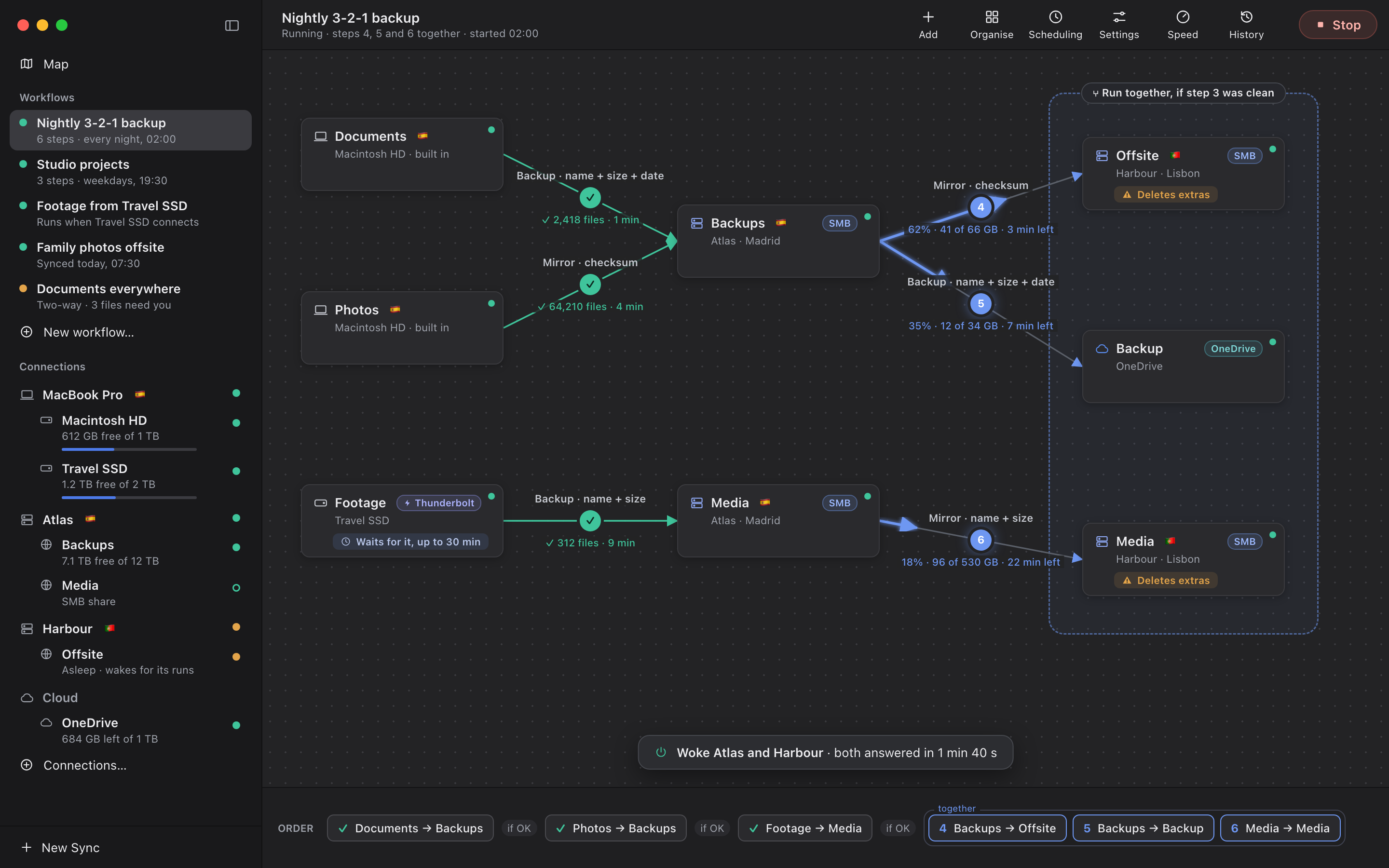
The canvas is where you build a workflow and also where you watch it run. Finished steps turn green with what they copied. Running steps fill from tail to head with the bytes left and the time remaining.
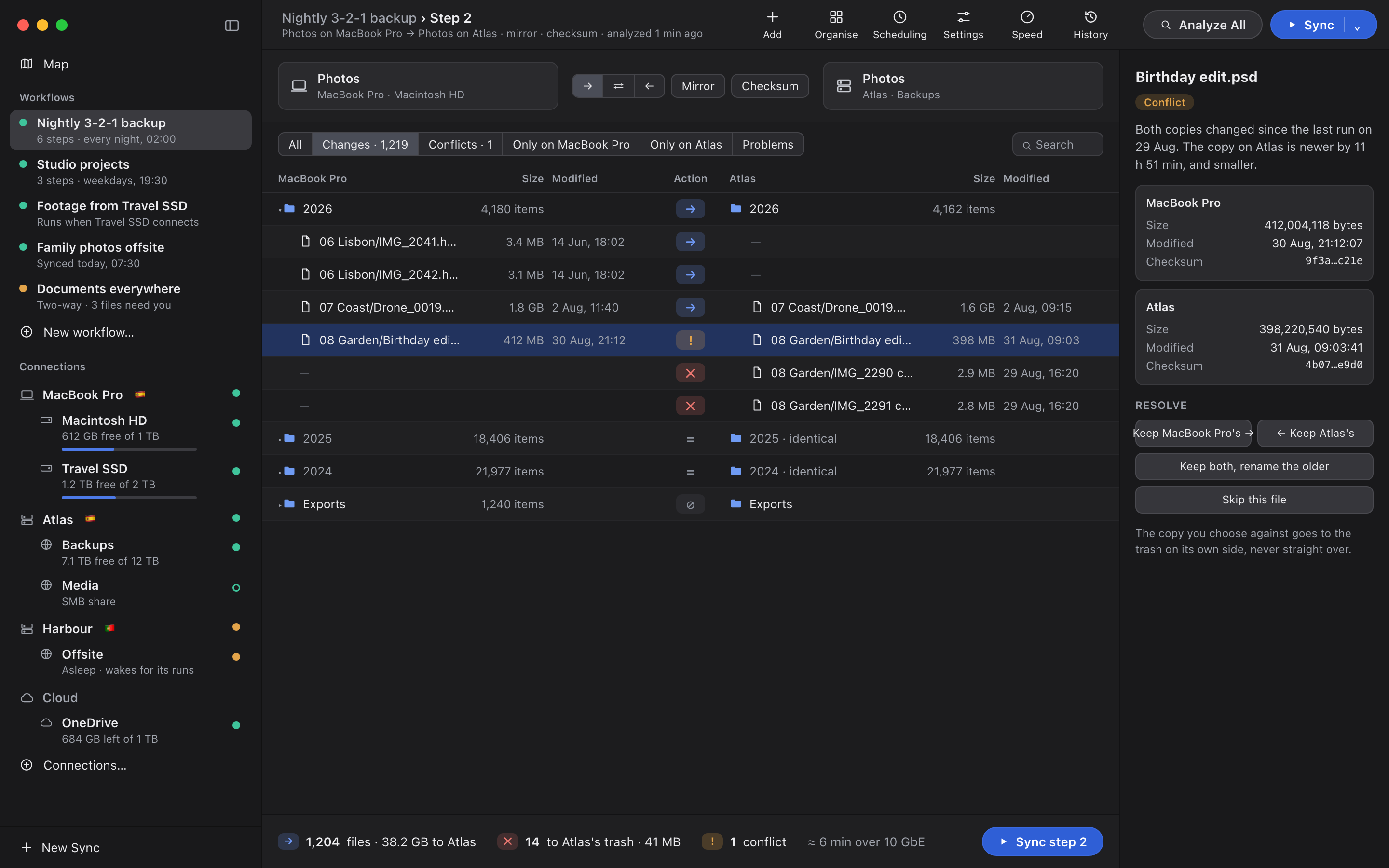
The review table lines up both sides by path, so a file on one side only shows an empty cell on the other. The arrow in the middle is the action, and the inspector says why.
Built natively for the Mac with Apple's own frameworks, and no third-party code inside.
Internal disk, USB, Thunderbolt and NVMe drives, recognised by the drive itself, not just its name.
SMB shares on any NAS, Mac or PC. Mounted when a run needs them and put away after.
Personal OneDrive through Microsoft's own sign-in. Incremental changes, resumable uploads.
Your Photos library as a source: a year, a month, or all of it, copied out as files.
In Asturian folklore the trasgu is the house goblin who gets the chores done overnight. Trasgu Sync is not available to download yet.
Take the tour