Fourteen pieces written between 1996 and 2024 — Imperial College, the London School of Economics, the European Commission, and consulting practice since. Four of the oldest have been taken apart again and checked against what actually happened.
A collection of old and new work: engineering and information systems papers written between 1996 and 2002, professional writing since, and the software I build now. Four of the earliest pieces carry an analysis written a quarter of a century later, checking what they claimed against what actually happened.
14
Pieces 1996–2024
4
Reassessed in 2026
56
Forecasts re-checked
Aeronautical Engineering
Imperial College London · 1996–2000
Four years of MEng work: a final-year dissertation on turbulence modelling, two studies of supersonic aircraft programmes, a vehicle design project and a manufacturing paper.
2000MEng dissertation48 pp. · Fortran 77/90Imperial · Technion
Calculation of turbulent Couette flow using various turbulence models
Abstract, 2000
This paper describes some of the different turbulence models and their application to a one-dimensional steady incompressible turbulent Couette flow. In particular it looks at the mixing length turbulence model and at the standard k–ε turbulence model. A mixing length turbulence model code was created. Results from the program were compared with experimental and DNS data at several Reynolds numbers from 1,300 to 20,000. The results show good agreement with the DNS and experimental data.
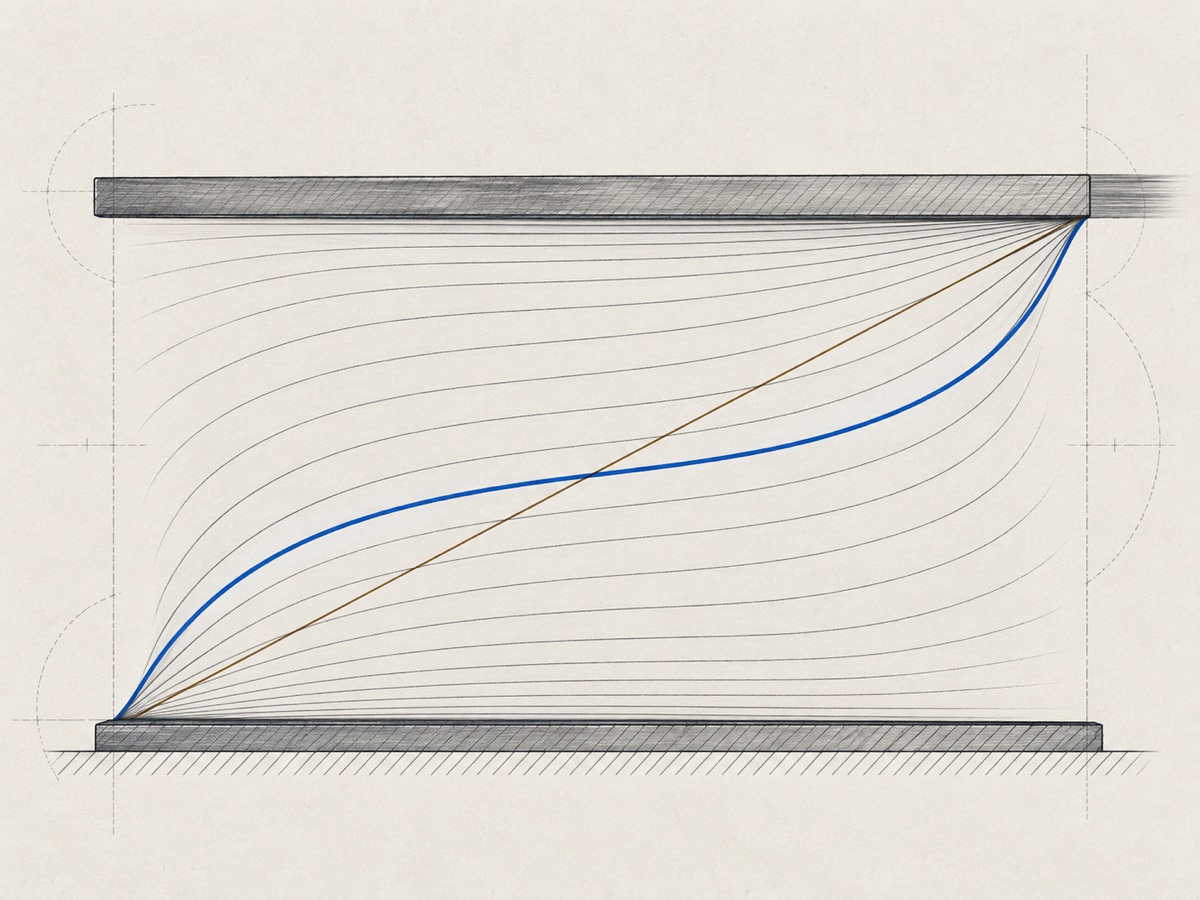
Fig. Mean velocity between two plates, one moving. Brass gives the laminar comparison; blue is the turbulent profile the models must reproduce.
Rev 2026Re-solved · September 2026
The 2000 conclusion holds — and it is stronger than the report claimed.
The same problem, rewritten as it would be done today: four turbulence closures instead of two, a solver that converges to round-off, and 2018 direct numerical simulations to judge it against instead of values read off printed graphs with a ruler.
This work studies the challenges in the construction of a potential successor to Concorde, in order to overcome the thermal requirements of sustained supersonic flight. It also provides background information on other supersonic aircraft contemporary to Concorde.
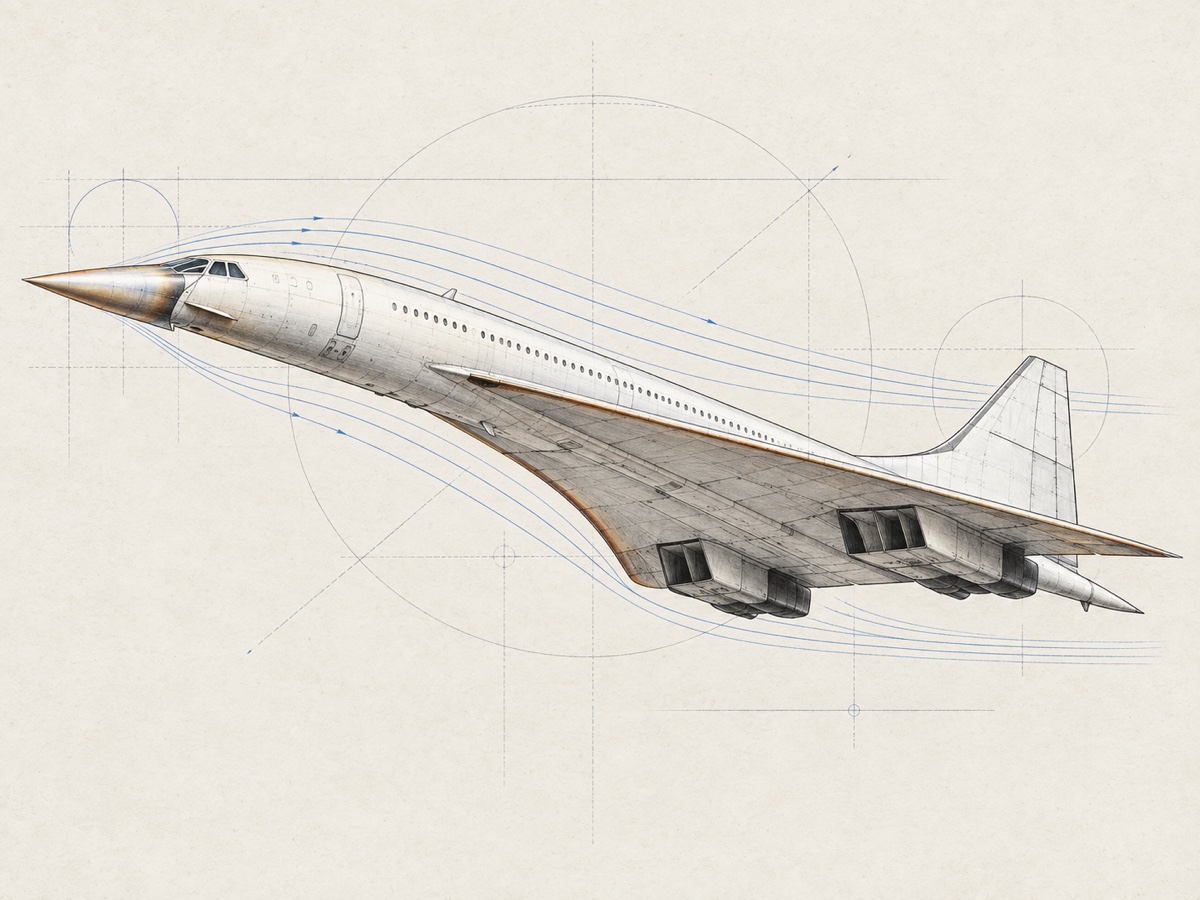
Fig. Concorde at Mach 2. The brass-toned nose and leading edges mark the airframe's thermal problem: roughly 127 °C at the nose and 25 cm of expansion.
1999Coursework studyWith Severin de Valence
The TSR2 programme
Abstract, 1999
This work provides extensive background on the TSR2 programme and analyses the management failures that led to the cancellation of what could have been one of the most capable aircraft of the Cold War.
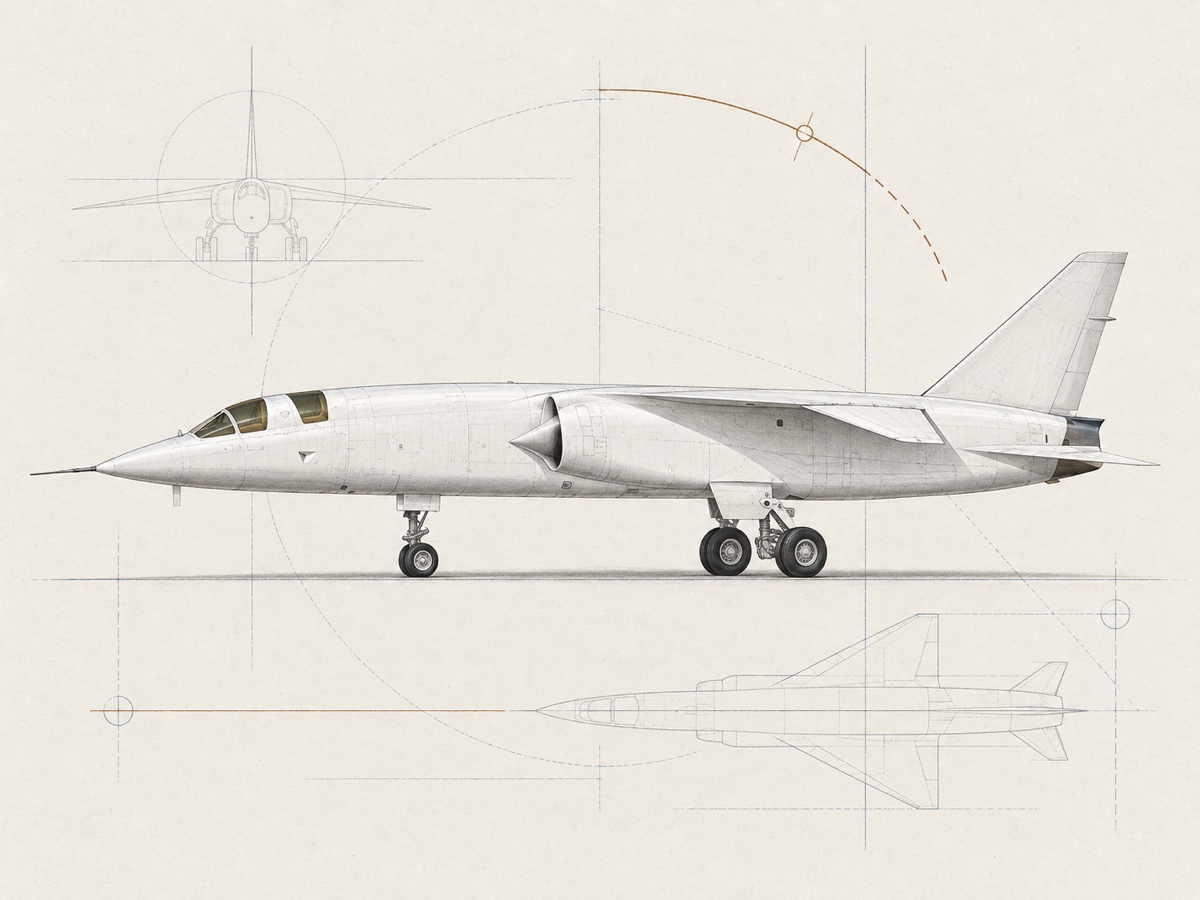
Fig. The TSR2 as an engineering programme: a highly capable aircraft interrupted mid-trajectory. It was cancelled in April 1965 and its jigs were ordered destroyed.
The objective of this project is to design an ice yacht. We chose to design a high-performance one for racing. There are several ice yacht competitions, the DN class being the most common. However, the designs used for this kind of race have not evolved in many years.
Full abstract
The DN design appeared in 1937 in a competition held by the Detroit News, and it was always designed as a low-cost vehicle. Using new materials, semi-rigid wings allowing for highly efficient aerofoil sections, and putting a lot of effort into reducing drag by streamlining the body, much higher performance can be achieved. We intended to design the Formula One equivalent of an ice yacht. This combines the capacity to travel at high speed with a certain amount of manoeuvrability. Due to time constraints I concentrated mainly on the aerodynamic, stability and geometrical aspects of the design, and less on the mechanical part.
Spec
6 m · single sail · 4 wings · composite frame · crew of 1
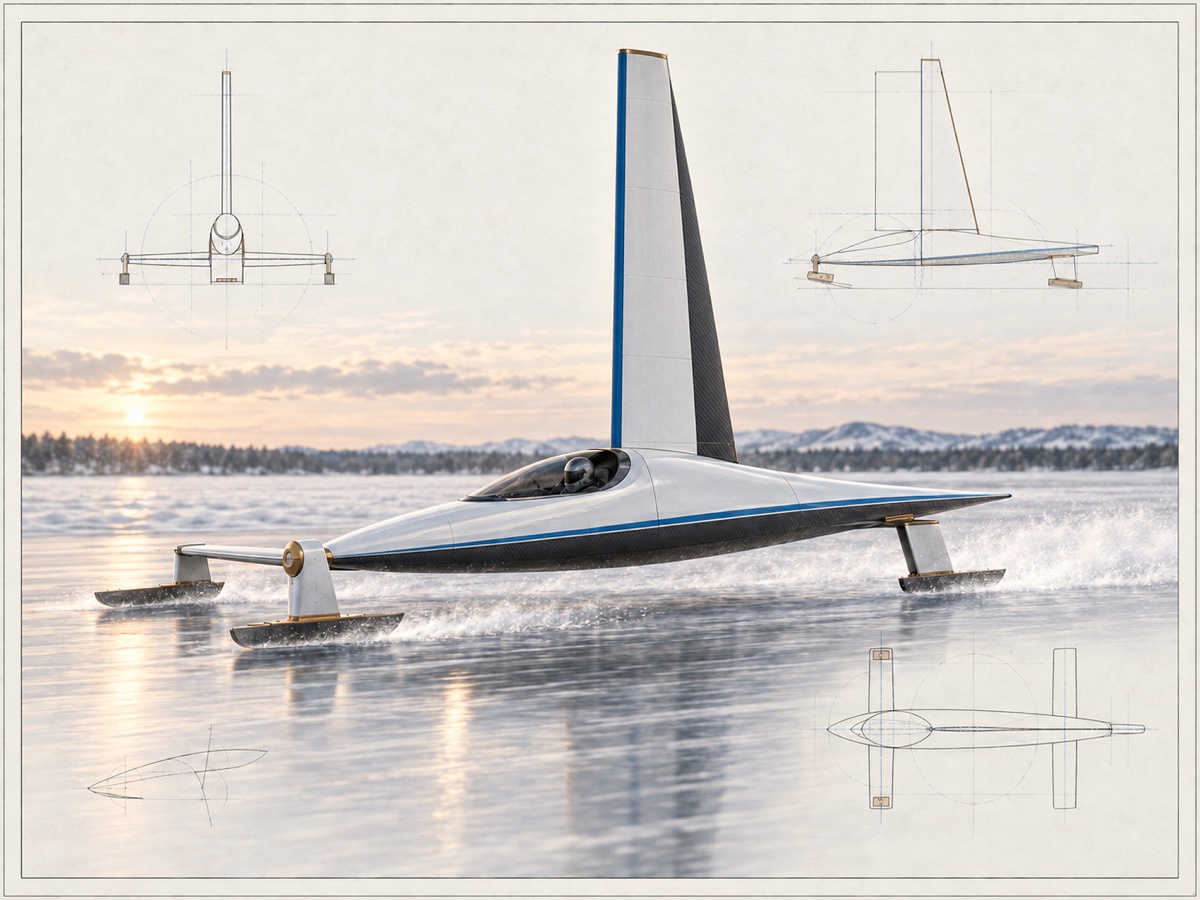
Fig. A realistic reconstruction from the report's final drawings: six-metre faired body, enclosed pilot, four-metre rigid wing sail, aerodynamic wings and ice runners.
Rev 2026Rebuilt and simulated · September 2026
The drawing becomes a vehicle — and the top-speed claim comes down.
The 1999 study was three orthographic views and a drag figure averaged from two-dimensional panel estimates. The 2026 study rebuilds it as a parametric 3-D solid, checks that a 176 cm pilot actually fits inside it, runs the whole vehicle through viscous CFD, and then asks for the first time whether it would stay upright at the speed it claimed.
Geometry
2-D drawing, three views→3-D solid, faired and verified to 0.2 mm
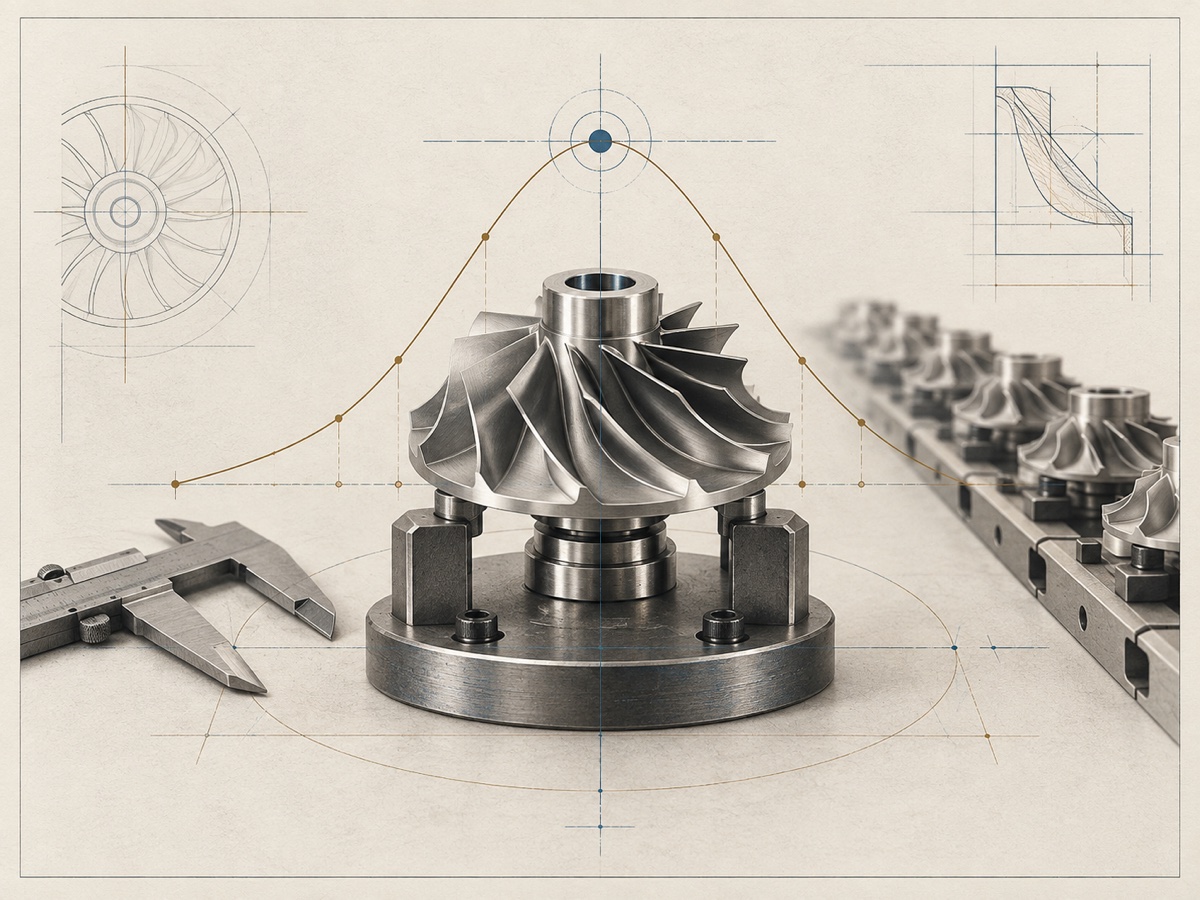
This work describes the Taguchi quality methods and ISO 9000, and their applications in the aerospace industry. It also explains just-in-time methods in the aerospace industry.
Fig. Quality as a controlled production system: precision at the target, continuous loss away from it, and repeatable parts arriving just in time.
Information Systems
London School of Economics · 2001
MSc year at the LSE Department of Information Systems: a dissertation on why a technology nobody could quite define was failing, and three essays on standards, file sharing and networked conflict.
2001MSc dissertationSupervised by Prof. Robert Galliers
Analysis of the slow adoption of Application Service Providers
Abstract, 2001
This research uses supplier-focused, user-focused and fads-and-fashions perspectives as a theoretical base to analyse the causes of the slower than expected rate of adoption of ASPs. It places an emphasis on the limitations of frameworks used to study innovations under strong evolutionary processes such as ASPs.
Full abstract
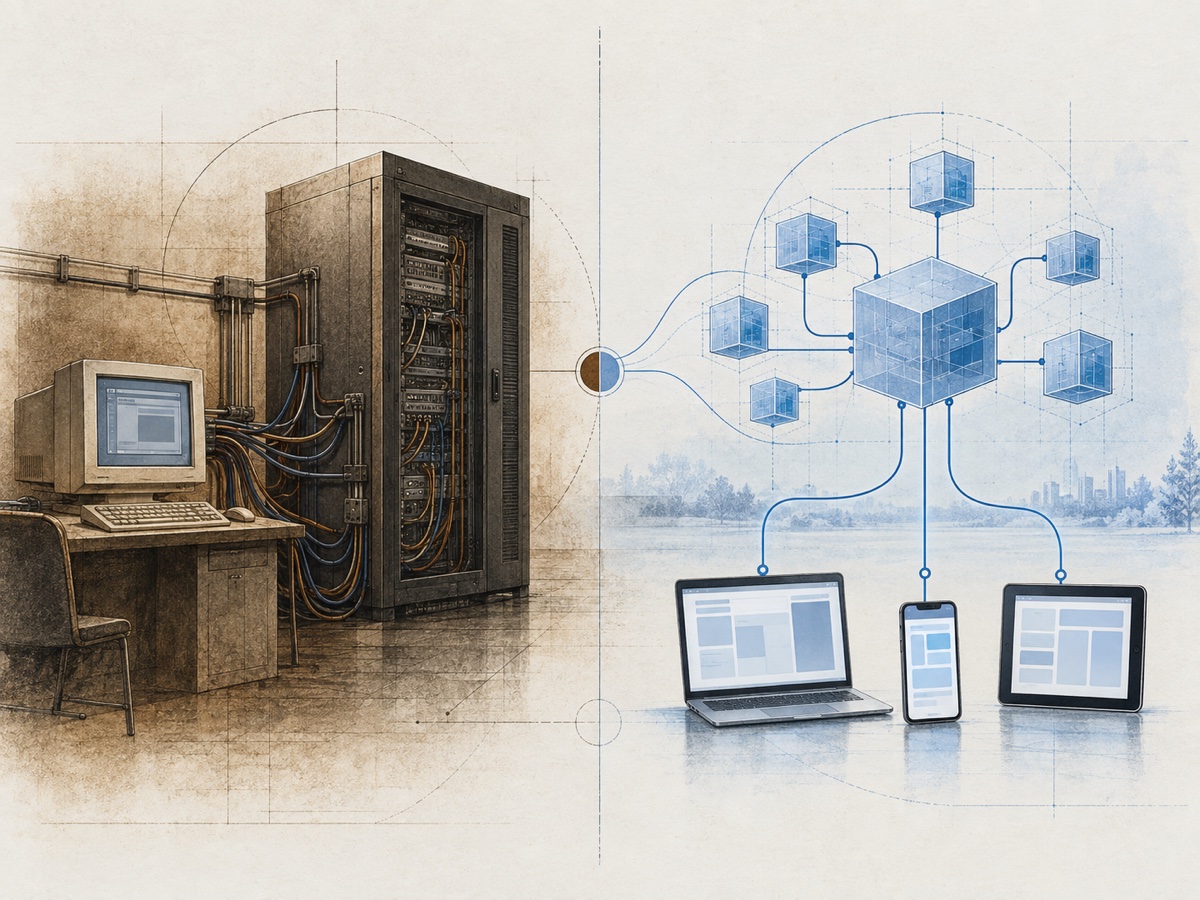
It has been found that many simplistic assumptions were made in the ASP design, and that unexpected complexity was discovered when unpacking the ASP 'black box'. It also analyses the problems in finding attributes for the ASP concept, as it is mixed with the technology, software or system that it delivers. The role of professional organisations and the communications media in setting a fashion for ASPs is studied. It is found that the media created an excellent start for a strong fashion, but that this did not translate into high adoption rates for the technology. The main causes for this are the errors in the underlying assumptions of the first wave of ASPs. The research also identifies the possible influence of the lack of support by professional organisations in triggering a second stage in the fashion-setting process that could have led to higher adoption rates. Finally, due to the significant interests dependent on the eventual success of ASPs, the general concept has not been abandoned. Fashion setters have been successful in preventing the ASP brand from acquiring a bad reputation as a failed innovation. This may give a newer and improved version of the ASP the chance to succeed.
Fig. From ASP to SaaS: bespoke hosted software and awkward connections give way to a standardised, modular service shared across devices.
Rev 2026Scored claim by claim · September 2026
Twenty checkable claims, twenty-five years later.
The market sized at $986m in 2000 was worth $299bn in 2025. IDC's $24bn forecast for 2005 arrived roughly a decade late. A plain count of what held up — no weighting, no index.
The value of technology standards, European IS policy and the success of GSM
Abstract, 2001
This essay discusses the value of setting technological standards to obtain harmonisation of the market, which can make a given system successful and create a competitive environment in the industrial sector that produces the hardware and software, or provides the services, for that information system. It also discusses the role that governments play in helping to set these standards.
Full abstract
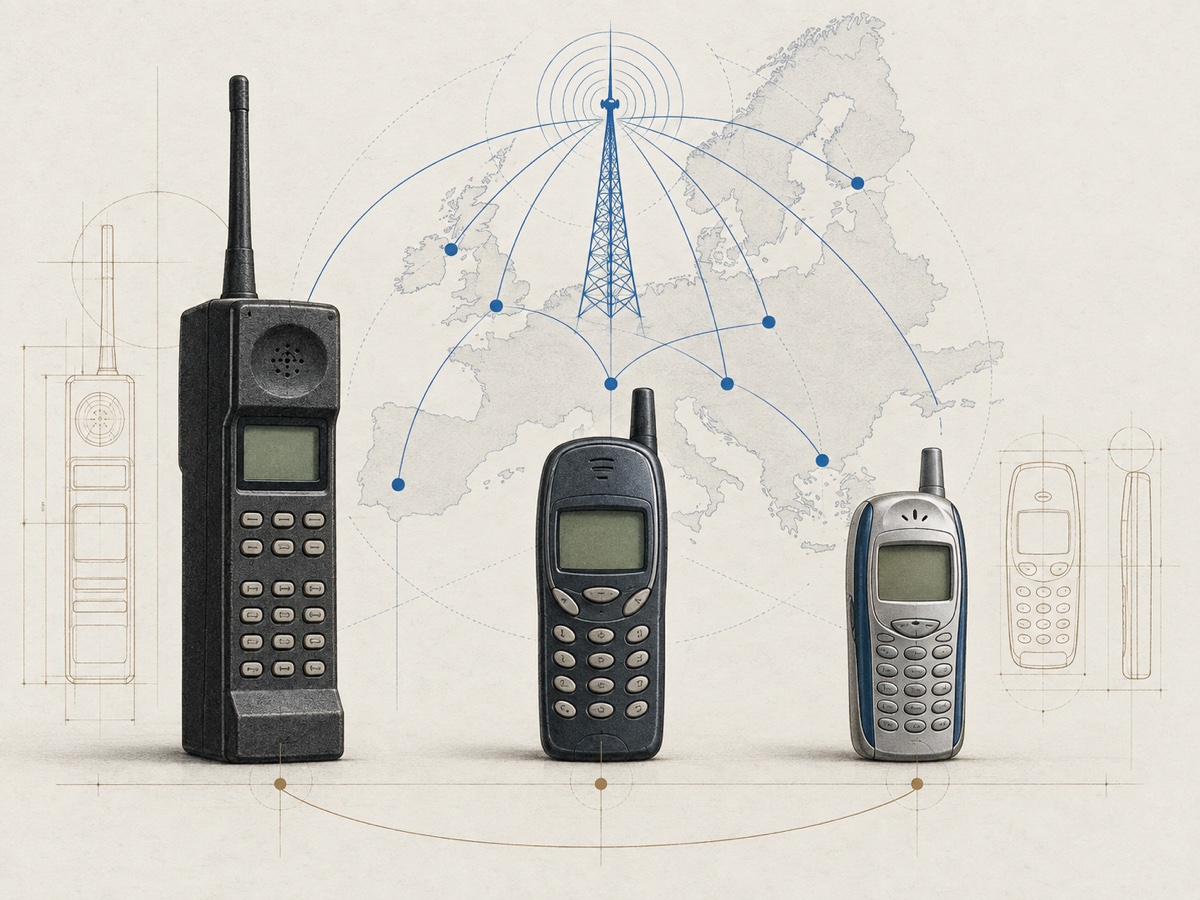
In particular I concentrate the discussion on the example of the GSM network in Europe, and the effects of the adoption of a European standard on the larger and earlier success of mobile telephony in Europe compared with the United States. I also include a brief discussion of whether a similar approach could have been used to create the basis for a standard in the European or world operating system market, to avoid the monopolistic practices of companies that have managed to position their proprietary technology as a de facto standard.
Fig. Three generations of GSM handsets on one European network: a shared standard made a continent-scale market and roaming possible.
2001EssayLSE · Information Systems
The success of Napster beyond music piracy
Abstract, 2001
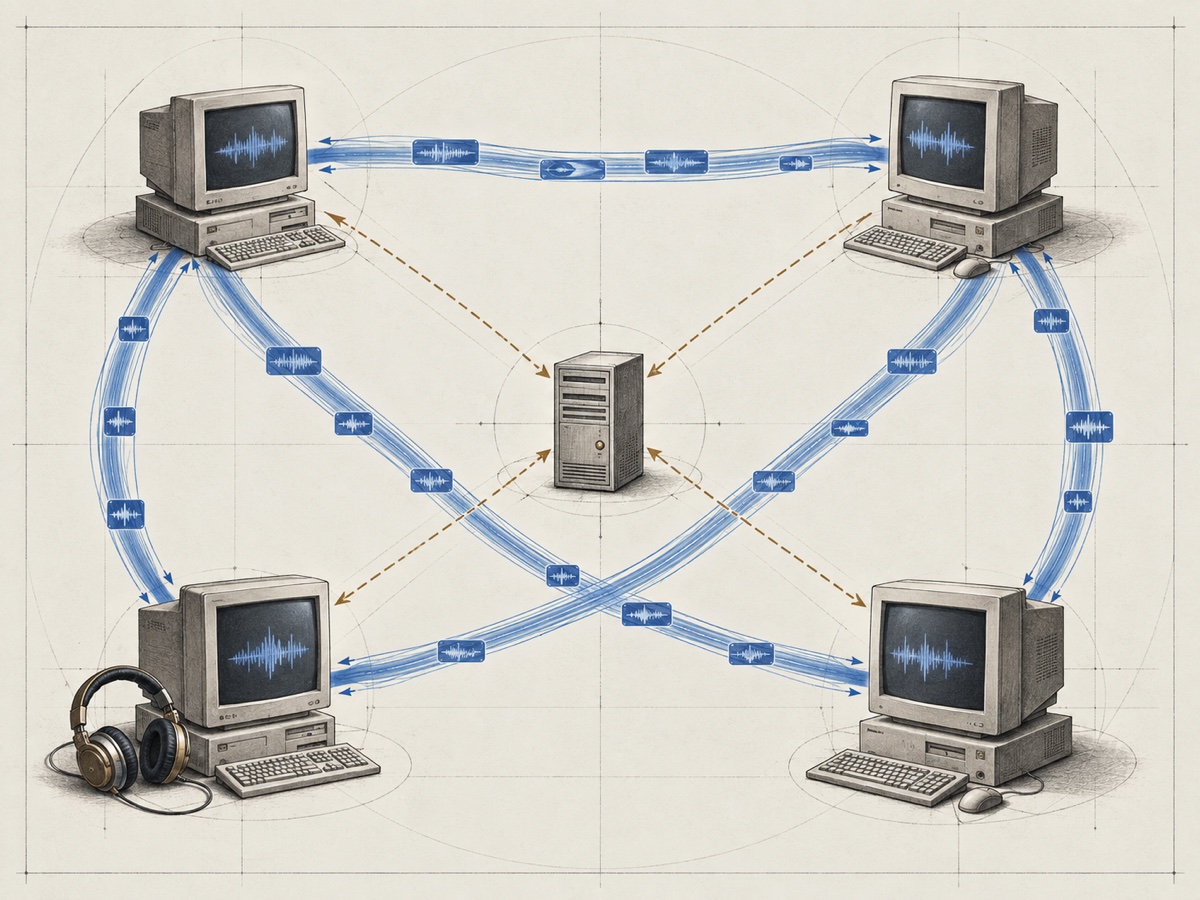
This essay analyses the most important factors, beyond that of providing a vehicle for music piracy, which fuelled the success of the Napster music-sharing network. It argues that a Napster-like music trading service incorporating some form of payment, but based on the same principles as the original Napster, could be the best way for the music industry to take advantage of the irreversible trend created by information technologies in the distribution of digital goods.
Fig. The article's premise, written in 2001: the contested ground is the civilian network, and taking out one node takes out the links around it.
Industry research
Commissioned reports & professional writing · 2000–2024
Commissioned work and professional writing: an 86-page report on electronic publishing written as an intern at the Delegation of the European Commission in Washington, a study of Moore's Law and the games industry for Deloitte Research, and three recent articles on the technology problems that turn up either side of a carve-out.
2000Commissioned report86 pp. · EC Delegation, Washington DCWith Pablo Amor Echeverri
Electronic publishing: an overview of the industry and its trends — a U.S. perspective
Abstract, 2000
An overview of the electronic publishing industry and its trends, from a U.S. perspective: document formats, mobile devices, e-books, electronic paper, digital music and digital video.
Fig. The device arc the 2000 report anticipated: paper becomes pixels, moving from a stylus PDA to a modern phone-sized publishing platform.
Rev 2026Forecast by forecast · September 2026
Thirty-six forecasts, judged on one question: did the thing happen?
The report opened with Internet Explorer at 86% of users, 117 million Europeans with a mobile phone, and eleven minutes to download one MP3. Every specific prediction in it has been put next to what actually occurred — quotes verbatim, typos included.
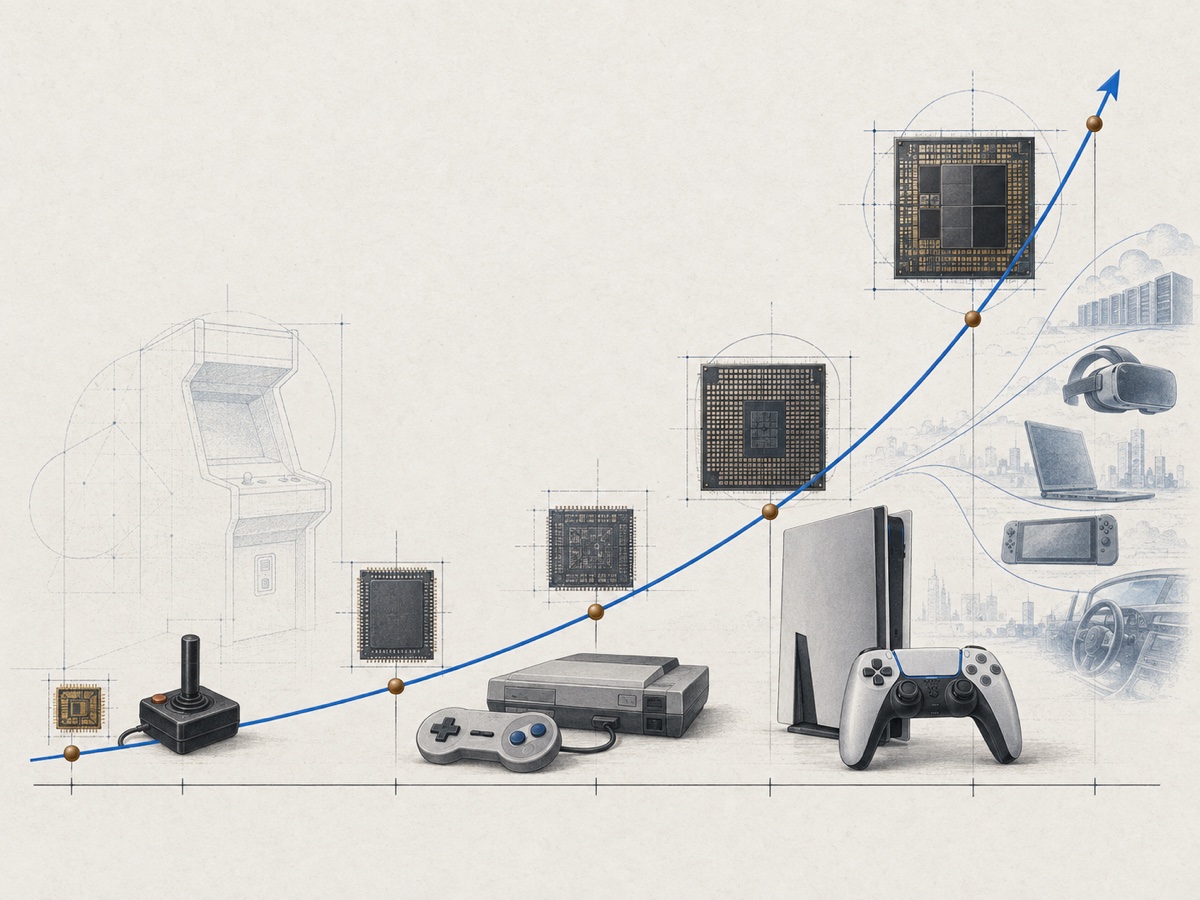
This report considers the impact that continuing technological advances will have not only on today's electronic games industry, but also on the growing number of industries significantly affected by it, including music, film, consumer electronics, advertising, communications and traditional toy manufacturing.
Fig. The compounding curve the report was betting on, now shown through the chips, controllers and devices that carried electronic games outward.
15 Sep 2024ArticleAlvarez & Marsal · PEPI, Digital Technology Services
Navigating the challenges of SAP ECC 6.0 end of support during carve-outs
Summary
Support for SAP ECC 6.0 ends in 2027. A company being carved out has to build a standalone IT estate and move to S/4HANA inside the same window — and "clone and go", the fastest route to separation, leaves both the parent and the new entity running their own upgrade projects on a heavily customised legacy system.
Plan the separation and the upgrade as one roadmap, not two.
Budget for extended ECC support in case 2027 is missed.
Book system integrators early — demand will spike as the deadline approaches.
Fig. One clock, two paths: separate the legacy estate while the parent and divested entity both modernise before support runs out.
22 Sep 2024ArticleAlvarez & Marsal · PEPI, Digital Technology Services
Recruiting senior technology leaders for divested organisations post-carve-out
Summary
The months after a carve-out are when value creation has to start, and they are exactly when the CIO or CTO seat is most likely to be empty. A quality search takes months, notice periods add more, and the pressure to close the gap quickly is how the wrong person gets hired into the most consequential technology role in the business.
Start the search inside the carve-out, not after it.
Use interim leadership that is accountable for the value creation plan, not just cover.
Weigh cultural and strategic fit as heavily as the technical CV.
Fig. The leadership gap: the carve-out and its value-creation roadmap are already moving while the permanent technology leader is still being recruited.
28 Oct 2024ArticleAlvarez & Marsal · PEPI, Digital Technology Services
Why more tools do not automatically increase your data analytics capabilities
Summary
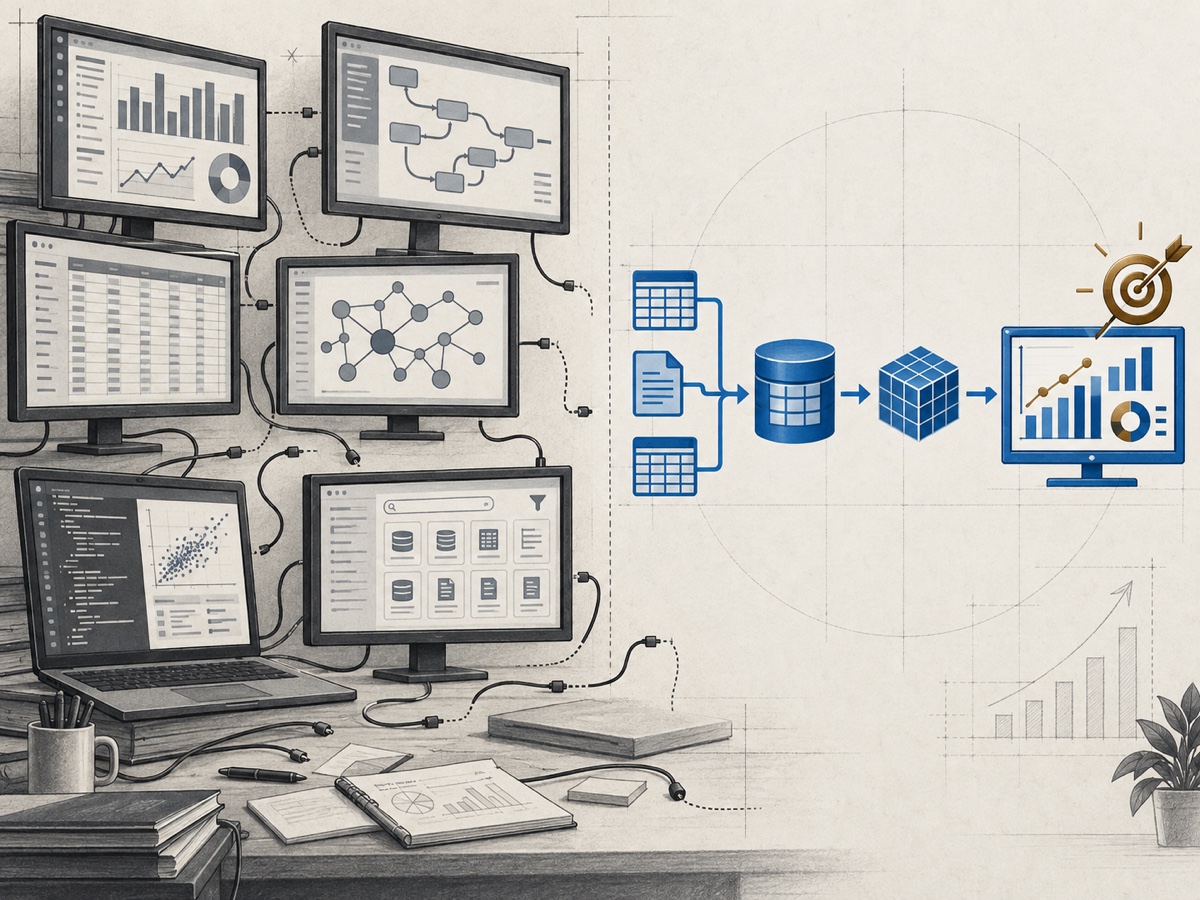
Warehouses, visualisation layers, lineage tools — each one is sold as the answer. They are enablers, not the capability itself. Without governance, ownership of data inside the business, and people who can read what the data is saying, more tools buy more licences and the same decisions.
No tool is a silver bullet; treat vendor promises accordingly.
Get the basics right first — quality, governance, a small model that can scale.
Attach a measurable value case to every tool you buy.
Fig. Dashboards, ETL, tables, lineage, notebooks and catalogues are only tools. Capability comes from connecting the right ones into a governed path from data to decision.
Software
Current · built 2025–2026
Applications built since, each with its own page. None of them are public downloads — if one looks useful, get in touch and we can talk about it.
Atlas
Organisation analytics
Org design with evidence: import a structure, model scenarios side by side, and take the comparison through to a leadership-ready story.